
In a world where political optics can be just as important as policy substance, President Donald Trump’s decision to spare Russia from his sweeping new tariff regime is raising more than a few eyebrows. In fact, it’s raising suspicion.
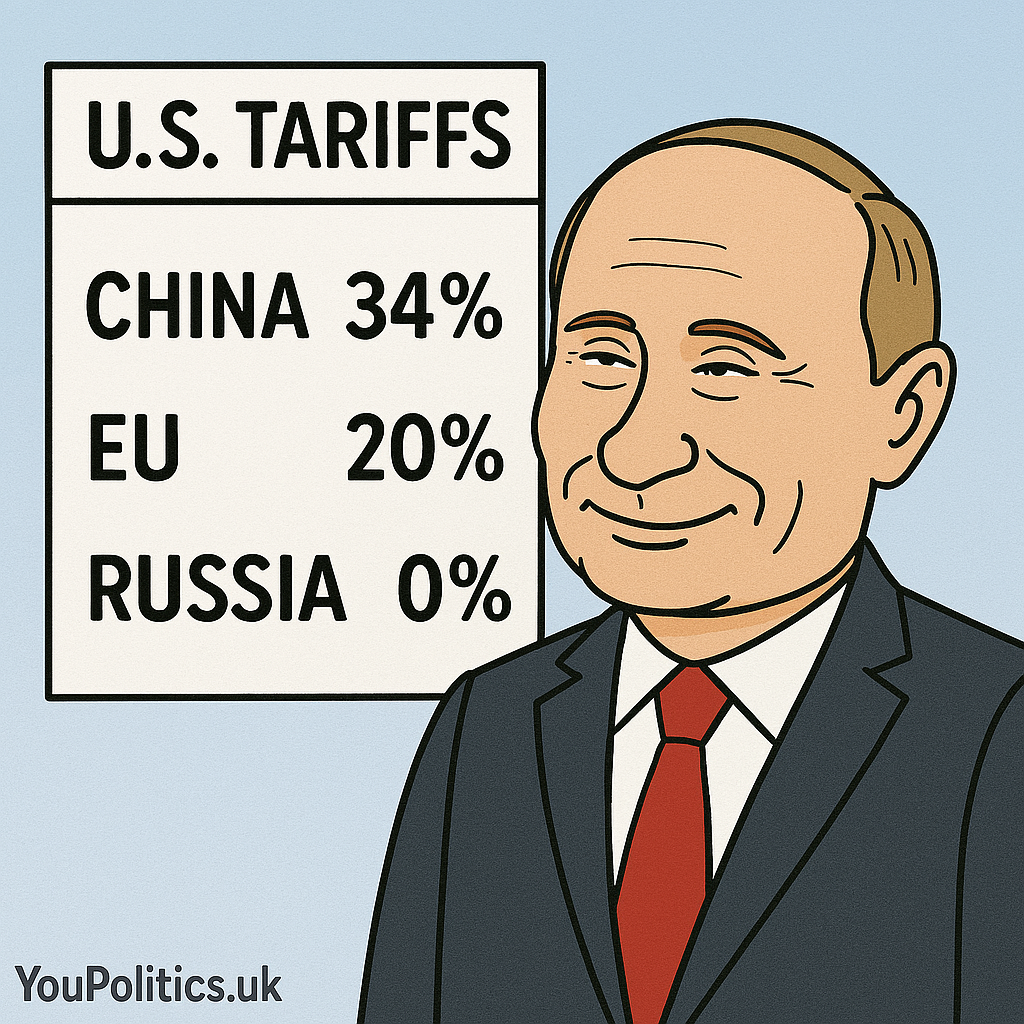
Last week, Trump thundered back onto the global economic stage with a bold announcement: a raft of new tariffs designed to protect American industry from what he calls “economic aggression” by foreign powers. China got hit with a whopping 34% tariff. The European Union didn’t fare much better at 20%. Even traditional allies like Japan and South Korea found themselves on the business end of trade penalties. But when the tariff list was released in full, one name was conspicuously absent.
Russia.
The omission is not only strange—it’s telling. At a time when Russia remains embroiled in its war of aggression in Ukraine, and when the West continues to try to isolate the Kremlin economically, Trump’s decision to exclude Moscow from new trade penalties flies in the face of both international consensus and common sense. So, the question arises: why?
Excuses and Explanations
Trump’s team has offered a predictably pragmatic explanation. According to aides, the United States doesn’t trade much with Russia anymore, and existing sanctions have already crippled the relationship. With trade between the two nations totalling a mere $3.5 billion in 2024, the logic goes, tariffs would be superfluous.
But this is disingenuous. Tariffs are rarely imposed based purely on volume. They are political tools, signalling displeasure, asserting dominance, or rewarding cooperation. The message behind sparing Russia is not neutrality—it’s approval. And in that context, the optics become far murkier.
Remember, this is a president who publicly praised Vladimir Putin as a “smart guy” for launching his invasion of Ukraine. It’s the same man who, during his previous presidency, often appeared more conciliatory to the Kremlin than to NATO allies. From questioning U.S. intelligence assessments on Russian interference to suggesting that Crimea rightfully belonged to Russia, Trump’s record is littered with examples of rhetoric and actions that benefited Moscow.
Is this tariff decision just another chapter in that strange, one-sided relationship?
Looking Beneath the Surface
So, let’s speculate. What might Trump gain from going easy on Russia?
Some have suggested economic opportunism. With U.S. inflation still biting, Trump may be calculating that maintaining low energy prices is more valuable than scoring symbolic points. Russian oil and gas, though under heavy sanctions, still find their way to world markets, often through intermediaries. A friendlier stance on trade might keep backdoor flows steady and prices down—particularly appealing in an election year.
Others whisper darker possibilities. Trump may see Moscow as more of a political partner than an adversary. And with his rhetoric again turning inward—talking about “American carnage” and “globalist elites”—a bit of foreign help might be welcomed rather than shunned.
And then there’s the simple answer: ego. Trump often acts on instinct, loyalty, or perceived slights. Putin, for all his faults, has never publicly humiliated Trump. Unlike Angela Merkel or Emmanuel Macron, Putin hasn’t lectured or challenged him. To Trump, that might be enough to earn a pass.