
In a move that’s left the nation gasping to grasp its implications, Chancellor Rachel Reeves has unleashed a financial tsunami with today’s Autumn Budget, promising to reshape the economic landscape of Britain in ways that could either herald a new era or signal the beginning of the end for the UK’s economic stability. Here’s the lowdown:
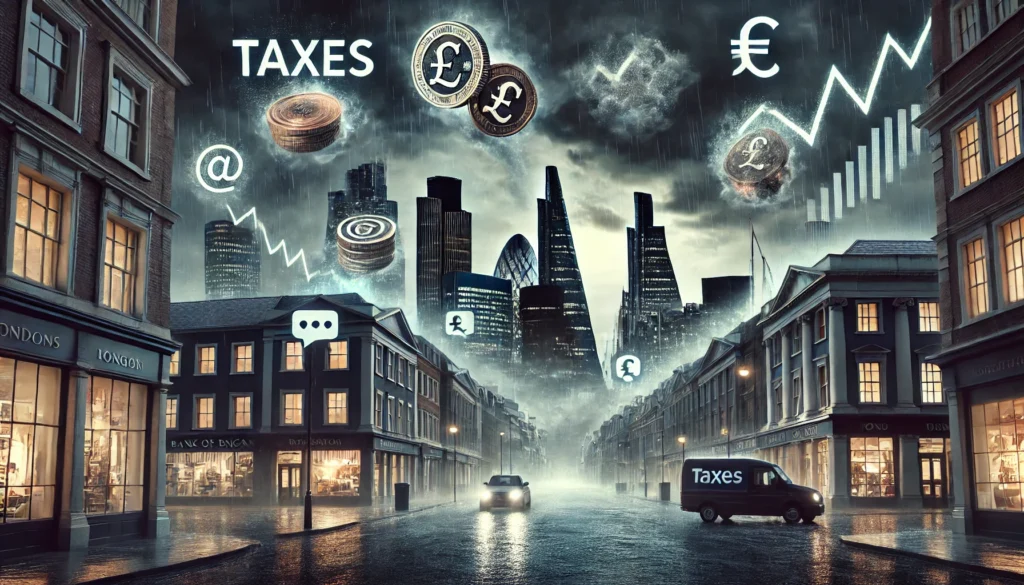
Tax Tsunami: The budget has introduced a staggering £40 billion in tax rises, the likes of which haven’t been seen since the days when John Major was navigating the stormy seas of British politics. Employer National Insurance contributions are set to surge, a move that could spell disaster for small businesses already teetering on the edge of survival. The sentiment on the streets and social media is clear – this is not just a tax hike; it’s an assault on the backbone of the UK’s economy.
Business Exodus on the Horizon: Experts and business leaders alike are sounding the alarm. With increased taxes, some are predicting a mass exodus of companies from the UK shores, looking for greener pastures where their profits aren’t so heavily taxed. The tweet from @gerardjasper sums it up: “Businesses will relocate out of the UK asap.”
Growth Forecasts Turned Gloomy: The Office for Budget Responsibility’s (OBR) growth forecasts have been downgraded, painting a less than rosy picture for the future. This budget, critics argue, might just be the nail in the coffin for any hopes of robust economic expansion in the near term. The chancellor’s promise to “invest, invest, invest” rings hollow when juxtaposed with these projections. The Daily Telegraph describes it as the ‘Biggest Ever Tax Rise Damages Growth Forecast.’
A New Era or A Step Back in Time? The budget’s attempt to fiddle with fiscal rules has stirred a debate. While some see it as a bold move towards transforming growth and productivity, others fear it’s a throwback to the 1970s, where economic mismanagement led to stagnation. “1978 here we come,” lamented one X user, capturing the fear that this budget might just drag us back into economic doldrums.
The Pound Takes a Plunge and Then Recovers: Financial markets have reacted with a mix of trepidation and cautious optimism. The pound initially weakened, falling below $1.2950, signaling investor concerns over the UK’s economic direction, but then rapidly rebounded. In a curious twist, Gilt yields are tumbling, suggesting that some see the long-term strategy as potentially beneficial for government borrowing.
The Social Impact: While the budget slashes at the wallets of businesses and high earners, the poorest might feel the pinch too. With every government department asked to find cuts, public services could face further strain, potentially leaving the most vulnerable in society to fend for themselves in an increasingly challenging economic climate.
The Verdict: Today’s budget has thrown the UK into a fiscal frenzy. Whether this is the beginning of a painful yet necessary restructuring or the prelude to economic disaster is hotly debated. Critics argue it’s a reckless gamble with the UK’s economic future, while supporters claim it’s a courageous step towards a new economic model. Only time will tell if this budget will be remembered as a masterstroke of fiscal policy or a monumental misstep.
As the dust settles on this bombshell budget, one thing is certain: the UK’s economic landscape has been altered, leaving businesses, workers, and the general public to navigate through what may be the most turbulent financial waters in decades.
Labour said they were planning for growth. But this budget doesn’t provide it. The OBR’s forecasts, based on this budget are for growth of between 1 and 2% for the years ahead – behind inflation.
Still, the OBR are consistently wrong about everything – so let’s hope they are wrong again…