
In a financial twist that could rival any soap opera, the UK’s new Chancellor, Rachel Reeves, might have just thrown the economy into turmoil, or so some are beginning to whisper. The drama unfolded as the price of UK 10-year Gilts took an unexpected leap today, sending shockwaves through the financial markets and leaving investors clutching their pearls.
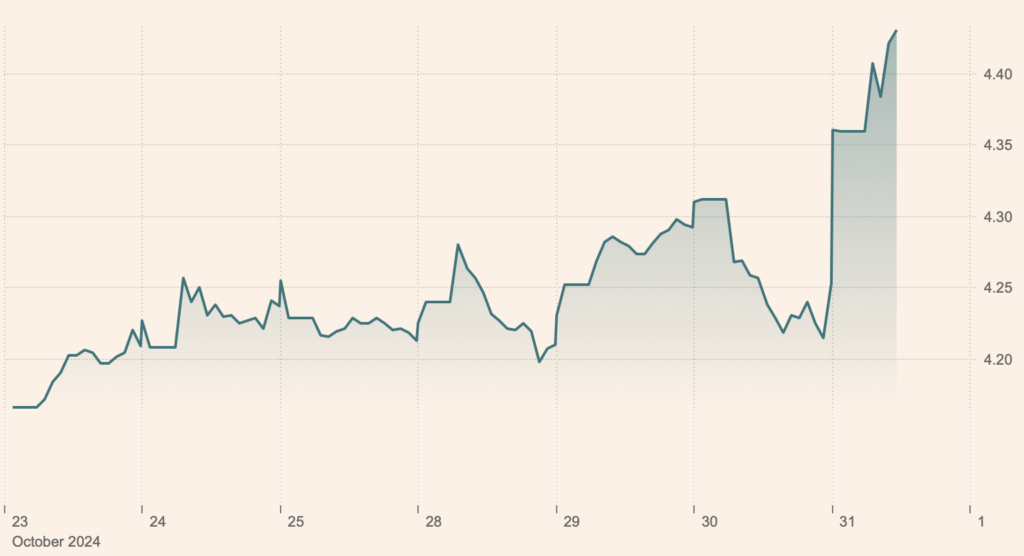
UK 10 Yr Gilts Prices
But What Are Gilts, Anyway?
For the uninitiated, Gilts are essentially IOUs issued by the British government. Imagine if you lent your mate a few quid, but instead of a dodgy handshake deal, you got an official promise from the government that they’ll pay you back with a bit of interest over time. These securities, or ‘Gilts,’ are seen as one of the safest investments around because, well, it’s the government you’re lending to.
The price of these Gilts moves inversely to their yield; when prices go up, yields go down, and vice versa. So, when UK 10-year Gilts are rising in price, it’s not just a quirky market hiccup; it’s a signal flare shot into the economic sky.
The Chancellor’s Budget Bombshell
Rachel Reeves, in her debut as Chancellor, announced what some are calling the ‘Budget of Bravery’ or, for the cynics, a ‘Budgetary Blunder.’ Her plan? To fund a massive overhaul in public services with new investments in education, health, and housing. Sounds noble, right? But here’s where the plot thickens – to finance this grand vision, the government is borrowing more, which in turn affects the bond market, particularly the Gilts.
Today, as traders woke up to the news, the price of 10-year Gilts climbed, reflecting a market that might be losing faith in the UK’s fiscal health. Some investors are now biting their nails, wondering if this borrowing spree will lead to an economic crash.
Market Mayhem or Masterstroke?
Critics are quick to point fingers, suggesting that Reeves’ strategy might be akin to setting the economic house on fire to warm it up. They argue that increasing borrowing could inflate interest rates, making it more expensive for everyone from homeowners to businesses to borrow money. This could potentially stifle growth or even push the economy into a recession if not managed with the precision of a tightrope walker on a windy day.
However, not everyone’s doom and gloom. Proponents of Reeves’ budget see it as a necessary gamble. With a pledge to rebuild the UK’s infrastructure and public services from the ground up, they argue that temporary market jitters are a small price for long-term stability and prosperity. They’re betting on a future where these investments stimulate the economy, creating jobs and fostering growth.
The Public Pulse
On the street, reactions are mixed. Some are tightening their belts, fearing economic downturns, while others are optimistic, hoping that this bold move will finally mend the cracks in the NHS, education, and housing sectors. On social media, the hashtag #ReevesRecovery or #ReevesRecession is trending, showcasing the polarised views on her economic strategy.
The Verdict?
So, has Rachel Reeves crashed the UK economy with her first budget? The jury is still out. While the rise in Gilt prices today might suggest investor nervousness, the true impact of her policies will unfold over time. One thing is for sure, in the grand theatre of economic policy, all eyes are now on Reeves. Will she be the heroine who turns the economy around, or will historians remember her as the Chancellor who gambled too much, too soon? Only time will tell, but one thing’s certain: the UK’s economic narrative just got a lot more interesting.