
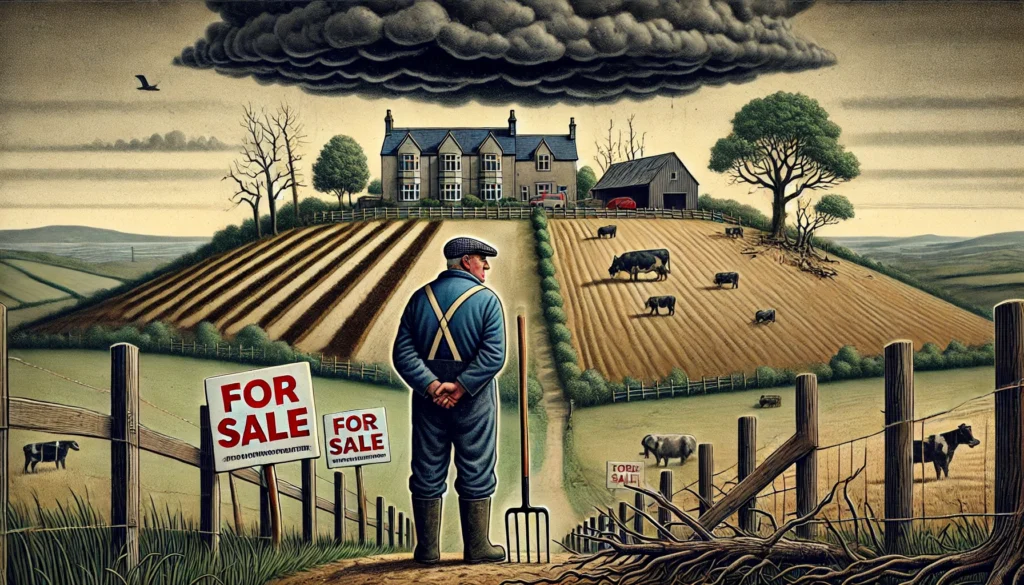
In an unprecedented move that has left farmers across Britain dismayed, the UK budget has introduced a sweeping change to inheritance tax that could spell the end for the traditional family farm. The Chancellor’s decision to reduce agricultural property relief (APR) from full to partial has hit the rural sector like a bolt from the blue, threatening to carve up the countryside in ways not seen since the enclosure acts.
The Taxing Tale of Inheritance
Under the new tax regime, the first £1 million of a farm’s value remains exempt, but any value exceeding this threshold will now incur a 50% relief, effectively taxing any additional worth at 20%. For many family-owned farms, this adjustment means a hefty tax bill upon the death of the current owner, potentially forcing the sale of land to cover these costs.
This policy shift has sent shockwaves through the agricultural heartland. Richard, a farmer whose family has tilled the same soil for generations, expressed his despair on X, “I’m devastated by the news. 85% of family-run farms will face this. This could be the end of our legacy, our livelihood.”
The Ripple Effect: More Than Just Tax
The implications of this tax change are profound, extending beyond the personal tragedy of losing family land:
- Food Security at Stake: As farms are sold off or downsized, the capacity for domestic food production could plummet. With Britain already a net importer of food, this could exacerbate reliance on foreign produce, raising questions about food security and sustainability.
- Environmental Impact: Family farms have been long-term custodians of the environment, often engaging in practices that support biodiversity. The fragmentation of these estates might lead to a decline in such stewardship, as new owners might not share the same commitment to environmental care.
- Economic Consequences: The rural economy could suffer as farms close or reduce operations. This means less local employment, less spending in rural communities, and a potential decrease in the UK’s agricultural GDP.
Voices from the Fields
The Country Land and Business Association (CLA) has not minced words, stating on X, “This budget does not ‘protect the family farm’ as promised. It endangers our rural economy, our food security, and our environmental recovery.”
Another farmer, whose identity was shared on X, highlighted the financial realities: “With a £4 million farm, we’re looking at a £600,000 inheritance tax bill. Where do you think that money comes from? We’ll have to sell land, diminishing our ability to farm effectively.”
The Future of Farming in Question
This budget has sparked a debate not just on tax policy but on the very future of British agriculture. There’s a fear that smaller, family-run operations will be swallowed up by larger conglomerates or repurposed for housing, fundamentally altering the rural landscape.
While some argue that this could open the door for innovation in farming, requiring farms to become more business-savvy, the general sentiment from those on the ground is one of betrayal. “Policy made by townies,” one X user lamented, capturing the frustration of those who feel their way of life is under threat by those who do not understand it.
Conclusion: The Inheritance Tax Harvest
This tax change isn’t just about numbers on a balance sheet; it’s about heritage, tradition, and the very identity of rural Britain. As farms face the prospect of being taxed into oblivion, the question arises: What will be left of Britain’s agricultural legacy? The new budget might just have sown the seeds for a future where the fields of Britain are more about financial transactions than farming traditions.
Jeremy Clarkson’s reaction to the budget on X was: “Farmers. I know that you have been shafted today. But please don’t despair. Just look after yourselves for five short years and this shower will be gone.”