


The UK’s economy is on a knife-edge, all thanks to a theory that’s dividing economists and fuelling spending like never before: Modern Monetary Theory (MMT). Imagine it – politicians with the belief that they can open the spending taps without restraint, confident that debt doesn’t really matter as long as inflation stays in check. But is this revolutionary thinking, or are we watching the UK’s finances teeter toward disaster? Let’s dig into the reality of MMT and why this economic experiment could bring lasting damage.
What is Modern Monetary Theory, Really?
MMT argues that a government with its own currency – like the UK – can spend freely without ever “running out” of money. The theory claims that as long as inflation is managed, there’s no need to stress about debt or balancing the budget. Government spending, they say, is only limited by inflation, which they believe can be controlled by increasing taxes as needed. In short, MMT insists we can fund everything from education to healthcare without borrowing constraints.
It’s no wonder MMT has its fans. It seems to answer every budgetary problem: spend on critical services, tackle inequality, fund massive projects, all without worrying about deficits. But while this theory sounds enticing, the real-world consequences are alarming, revealing that MMT might be more wishful thinking than economic solution.
Debunking MMT: The Core Flaws
At a glance, MMT is appealing, especially when budgets are tight. But this theory unravels quickly under scrutiny. Here’s why MMT’s ideas are dangerously misleading:
1. Inflation: Harder to Control Than MMT Suggests
MMT’s entire premise hinges on inflation control. The idea is that we can pump as much money as needed into the economy, reining things in only if prices start to spiral. But inflation isn’t that simple. It isn’t just caused by domestic government spending. International markets, energy prices, and supply chains all impact inflation. Right now, UK inflation is spiking due to global pressures on energy and imports – factors beyond what even the cleverest fiscal policy can handle. MMT’s claim that inflation can be managed like a thermostat ignores these external realities, making the theory dangerously simplistic.
2. Debt and Currency: The Pound is Already Feeling the Pinch
MMT overlooks how piling on debt impacts a currency’s value. When a government takes on excessive debt, investor confidence can drop, and the currency may devalue. For the UK, where a strong pound is essential for affordable imports, this is a serious issue. If the pound weakens, everything from fuel to food costs more – hitting ordinary Britons the hardest. Right now, the pound is under pressure, partly due to rising national debt, proving that debt is not as benign as MMT would have us believe.
3. Investor Confidence is Not a Small Matter
Investors are crucial for funding government operations at low interest rates, making their confidence essential to economic stability. But if they see government debt spiralling, they might demand higher returns on bonds or even avoid lending altogether. Contrary to MMT’s assumptions, this makes borrowing costlier and could create a cycle of debt that only gets more expensive to manage. The UK’s recent borrowing, fuelled by MMT thinking, is already making investors nervous, threatening to make future borrowing pricier and harder to sustain.
4. The Overlooked Factor: Public Trust
The final piece of the puzzle is public trust. MMT treats government currency like it’s infinitely resilient, but people need to believe in the stability of the pound for it to work. If public confidence wavers, people may turn to more stable options like foreign currencies or gold. MMT supporters often dismiss this risk, but a shaky pound could prompt people to save less in pounds, undermining trust in the economy. Simply put, MMT’s claim that debt doesn’t matter ignores the human element of economic trust – the backbone of currency stability.
Why is the UK Government Embracing MMT?
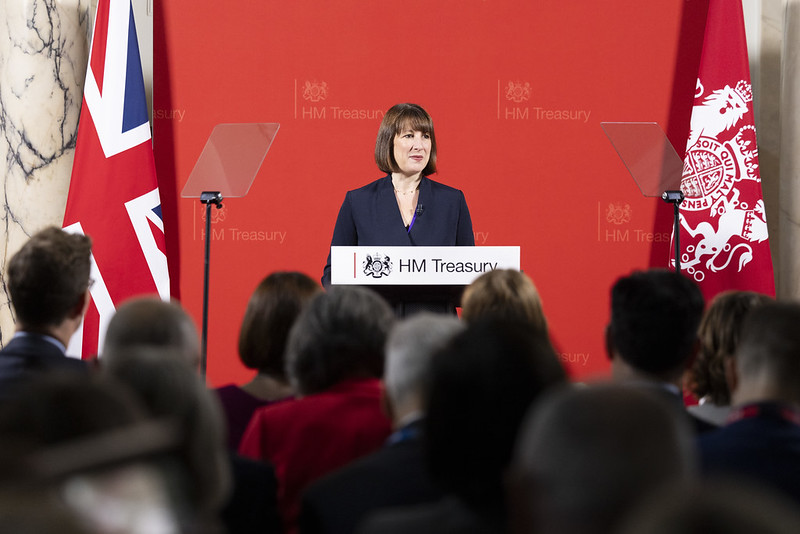
Though the Chancellor, Rachel Reeves, hasn’t explicitly declared MMT as her guiding principle, it’s clear that MMT’s influence is seeping into policy. Government spending has ramped up, justified as necessary to fund critical projects and stimulate the economy. But without acknowledging the long-term risks, this spending spree threatens to burden future generations with an escalating debt crisis.
Of course, the UK needs to invest in healthcare, infrastructure, and social services. But the MMT-style approach being considered doesn’t come without a cost. Alternatives like reforming tax collection or closing loopholes for big corporations offer ways to boost funding without the risks tied to high debt. Unfortunately, MMT’s promise of “free spending” has blinded many to these more sustainable options, pushing the government further into debt and leaving the economy increasingly vulnerable.
The Hidden Costs of MMT: What Britons Stand to Lose
MMT may sound like a green light for endless government spending, but it’s the average Briton who could end up paying the price. Here’s how:
- Higher Prices: As the pound weakens due to increased debt, import prices rise. This “hidden tax” affects everyday items from food to electronics, squeezing household budgets.
- Unstable Currency: A currency under strain impacts everyone. Wages, savings, and pensions all lose value in real terms, reducing the purchasing power of ordinary people and eroding the value of long-term savings.
- Debt Burden for Future Generations: With each new round of borrowing, future taxpayers face the burden of paying down a debt they didn’t create. MMT may sound harmless, but its impacts are anything but.
What’s the Real Solution?
Sound economic policy relies on more than just one theory – it needs balance, caution, and a clear eye for long-term stability. The UK’s approach needs to centre on sustainable, careful spending, and responsible tax reforms, not theories that promise the moon and stars without facing real-world realities. Collecting what’s owed by corporations, refining tax laws, and investing with a focus on long-term returns would be far wiser than embracing MMT’s wild spending spree.
Final Thoughts: Beware the Allure of MMT
Modern Monetary Theory is tempting. It offers what seems like an answer to budget limitations and funding shortfalls. But MMT is ultimately a pipe dream that ignores the fundamentals of inflation, debt, and public trust. The UK’s recent borrowing shows the risks of allowing MMT’s influence to shape policy unchecked. If something sounds too good to be true, it usually is – and MMT is no exception.
Let’s hope that policymakers heed the warning signs. While MMT offers seductive ideas, its promises rest on shaky foundations. The UK needs policies rooted in realism, not fiscal fantasies. Embracing sensible, sustainable economic strategies will safeguard the country’s future far better than any unrestrained theory could ever hope to achieve.