
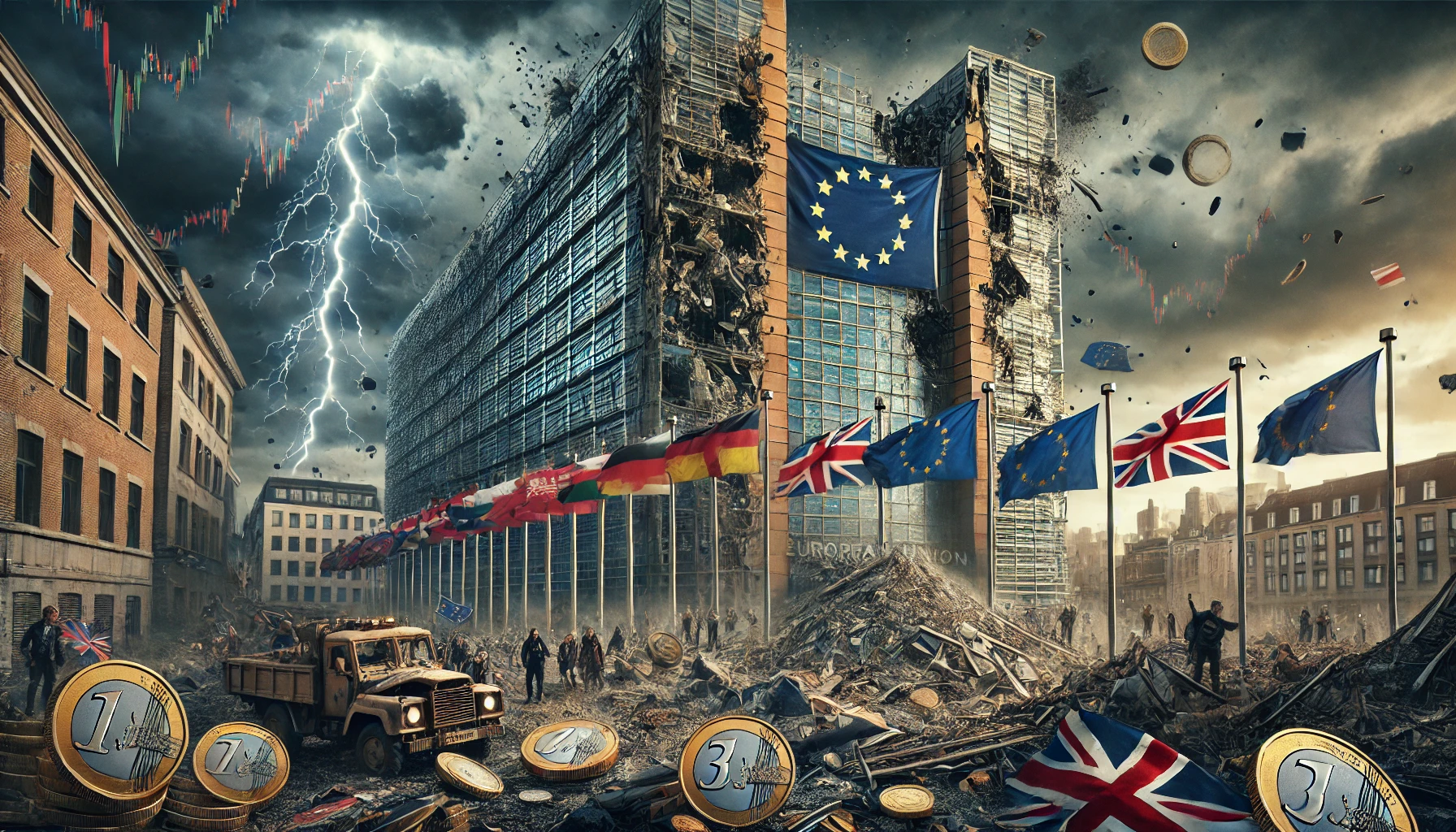
The European Union, once supposedly a beacon of unity and stability, is grappling with a myriad of challenges that threaten its cohesion and future.
Economic Uncertainty
The EU’s economic landscape is fraught with difficulties. High inflation and slow economic growth are plaguing member states. The financial aid promised to Ukraine has caused significant strain, with member states struggling to agree on the necessary funding. The war in Ukraine has exacerbated these issues, contributing to energy crises and supply chain disruptions. Many EU countries are finding it hard to maintain solidarity, and the promise of Ukraine’s membership is adding to the financial burden.
Political Instability
The recent European Parliament elections have further highlighted the bloc’s internal fractures. Far-right parties made significant gains, particularly in France, leading to political upheaval. French President Emmanuel Macron dissolved the National Assembly and called for snap elections, a move that could destabilize one of the EU’s key members. The rise of far-right parties poses a threat to the traditional centrist dominance and could complicate governance across the EU.
Enlargement Challenges
EU enlargement efforts are facing considerable obstacles. Countries like Ukraine and Moldova are eager to join, but their integration poses significant economic and political challenges. The costs associated with rebuilding war-torn Ukraine and integrating it into the EU are immense. Existing members, particularly those who are net payers to the EU budget, are wary of the financial implications. Meanwhile, the Balkans are frustrated as their long-standing applications appear sidelined by the more urgent Ukrainian and Moldovan bids.
Internal Conflicts
The EU’s internal decision-making processes are under strain. The unanimity requirement for key decisions often leads to deadlock, with Hungary and Poland frequently using their veto power to block initiatives. There are discussions about moving to a majority voting system, but this proposal faces significant resistance. Additionally, Hungary’s defiance on rule-of-law issues and its opposition to EU policies complicate the bloc’s ability to present a united front.
External Pressures
Geopolitical tensions are another significant challenge. The potential return of Donald Trump to the White House could strain transatlantic relations, especially regarding trade and NATO commitments. The EU might face increased tariffs and reduced support for Ukraine from the US, forcing the bloc to navigate these complex dynamics on its own.
In summary, the EU is at a critical juncture, grappling with economic, political, and external pressures that could redefine its future. How it navigates these challenges will determine not just its stability and cohesion, but its survival in the years to come.
Sources:
- DW: EU’s tough challenges in 2024: Trump, Russia and more
- RFE/RL: Wider Europe Briefing: What To Expect From The EU In 2024
- The Parliament Magazine: EU enlargement: How close are the nine candidate states to membership?
- CFR: How Will the EU Elections Results Change Europe?
- Politico: Your guide to the 2024 European election in 9 charts